The Dos and Don’ts of Bystander Intervention
Bystander intervention is one of the most effective ways we can prevent and respond to gender-based violence. It’s about noticing when something doesn’t feel right, understanding that you have a role to play, and choosing actions that prioritise safety, care, and respect, for others and yourself.
Being an active bystander doesn’t mean confronting every situation head-on or having the perfect response. It means recognising harm and responding in ways that are safe and appropriate to the situation. Even small actions can make a meaningful difference.
Understanding how to be an active bystander, and the different ways you can intervene, plays an important role in preventing gender-based violence in our communities.
What do people actually do when they witness gender-based violence?
Research tells us that many people want to help, but aren’t sure how. The National Student Safety Survey (2021) examined bystander behaviour among Australian university students who had witnessed sexual harassment. Just over half of students (54.8%) reported that they had done something in response to the most recent incident they witnessed.
The most common action was talking to or offering support to the person who experienced the harm. Other responses included speaking to the person responsible, or raising the issue with someone at the university. Around one in ten active bystanders reported the incident formally.
The survey also found that around one in two students who witnessed sexual harassment chose to do nothing. The most common reason cited was: “I did not know what to do.”
Most people believe that when they witness problematic behaviour, their only options are to do nothing or to confront the situation in a way that feels uncomfortable or unsafe. But, there are actually multiple ways to intervene in ways that are safe and effective, and everyone’s capacity for action as a bystander will vary.
How do I be an active bystander?
When we think of bystander intervention, most of us think of a direct intervention, but there are both direct and indirect ways to intervene.
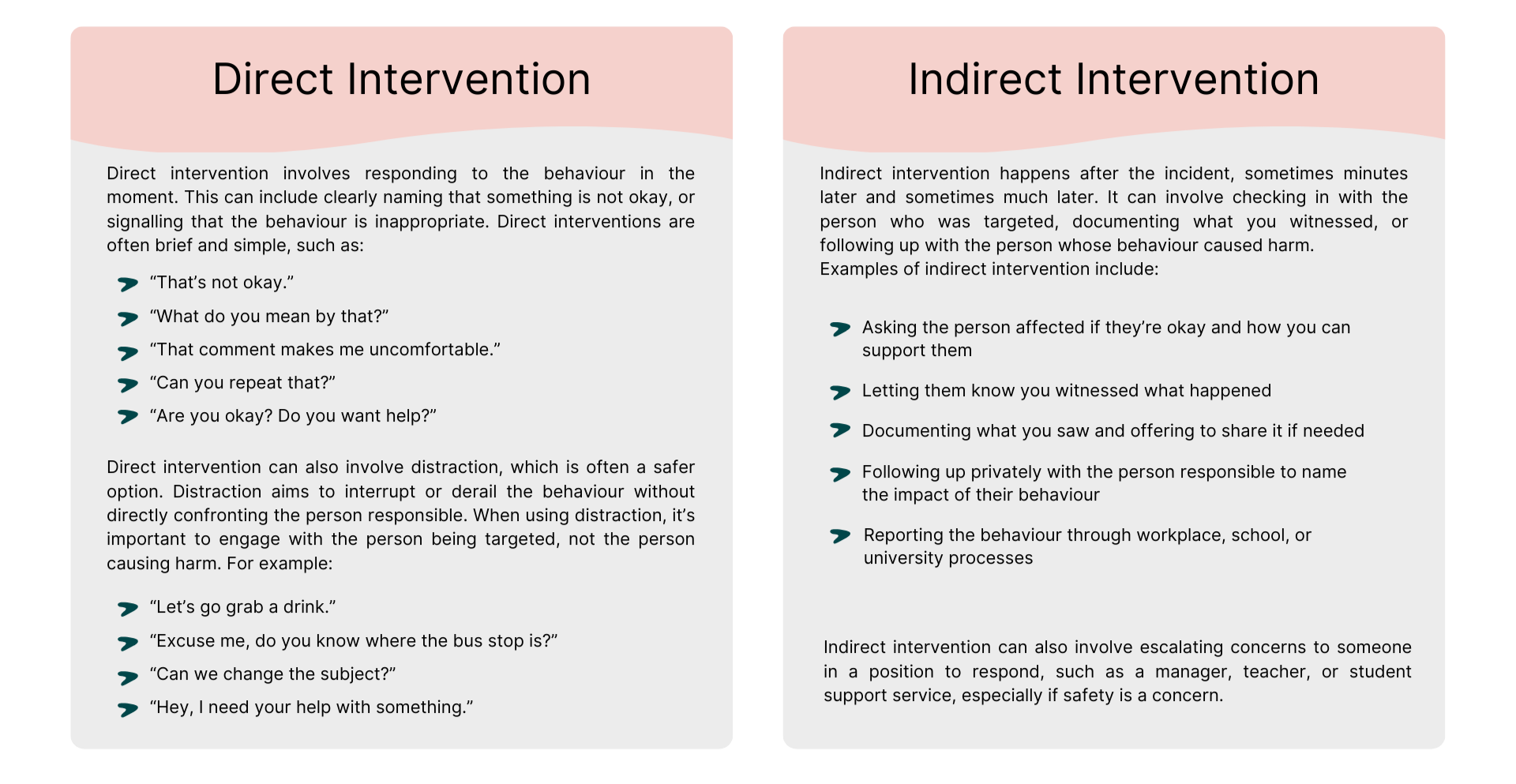
Choosing the safest response
“Ethical bystander intervention requires the bystander to be mindful of caring for themselves, as well as the impact on the other person.”
When it comes to bystander intervention, your safety is the number one priority. When choosing how to intervene, always focus on options that are safe first and effective second.
What matters is recognising harm and responding in a way that prioritises safety. Even small actions like a check-in, a distraction, walking someone home, can help challenge harmful behaviour and support those affected.
If there is a perceived risk of escalation or physical violence, bystanders are well within their right not to intervene.
Bystander intervention in everyday situations
Below, we explore common situations people encounter, what supportive bystander intervention can look like, and what’s best to avoid.
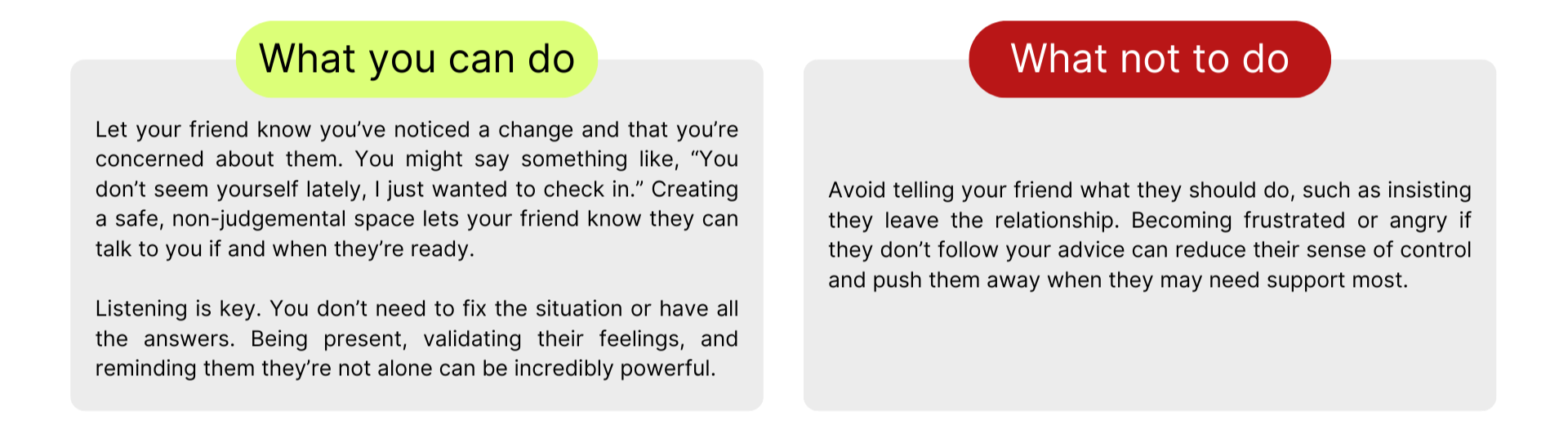
If you notice a friend has changed in their relationship
You might notice a friend becoming quieter, more withdrawn, or anxious. They may seem worried about how their partner will react to their choices, who they spend time with, what they wear, or how they behave around others.
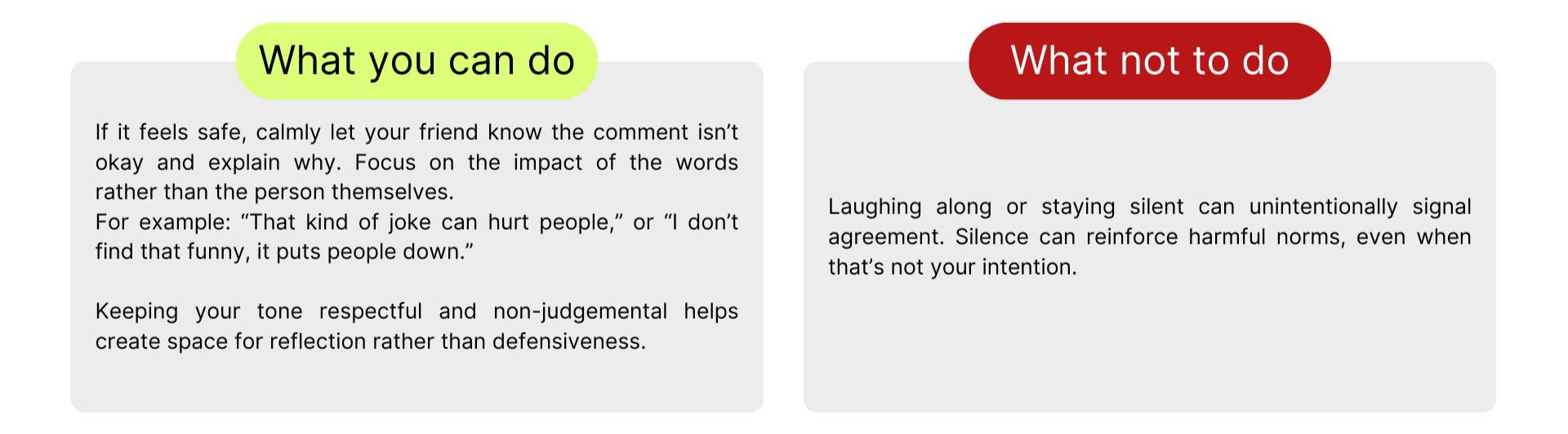
If a friend makes homophobic, cissexist, or misogynistic comments
Harmful language is often dismissed as humour or “just a joke,” but comments that target people based on gender, sexuality, or identity can reinforce discrimination and harm, even if no harm is intended.
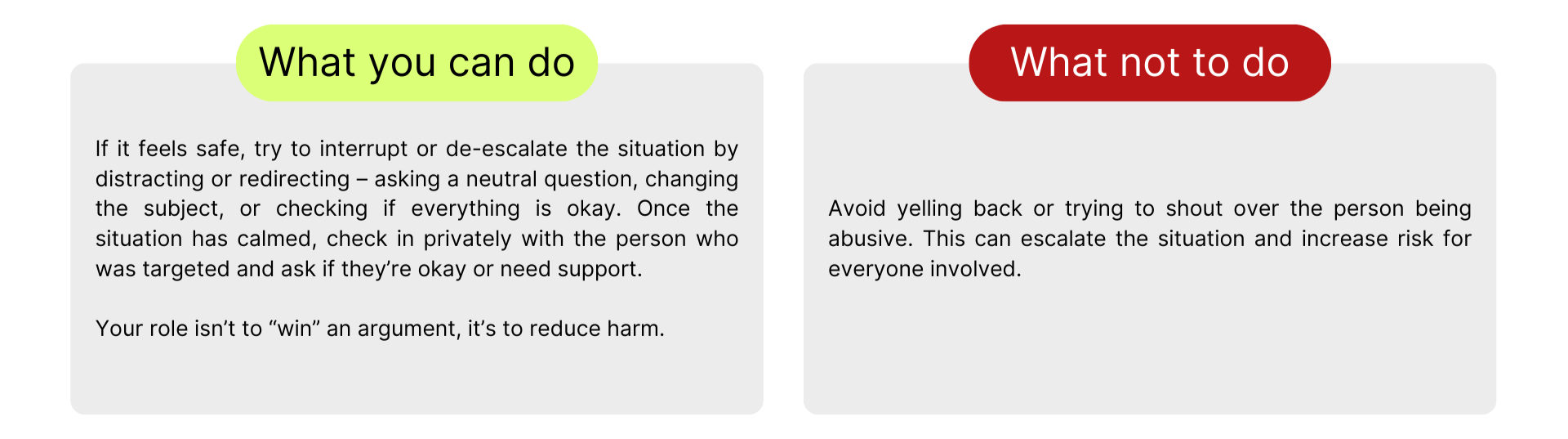
If you see someone becoming verbally abusive or yelling at someone else
Verbal aggression can be distressing to witness and can escalate quickly if left unchallenged.
If you see someone push another person or become physically aggressive
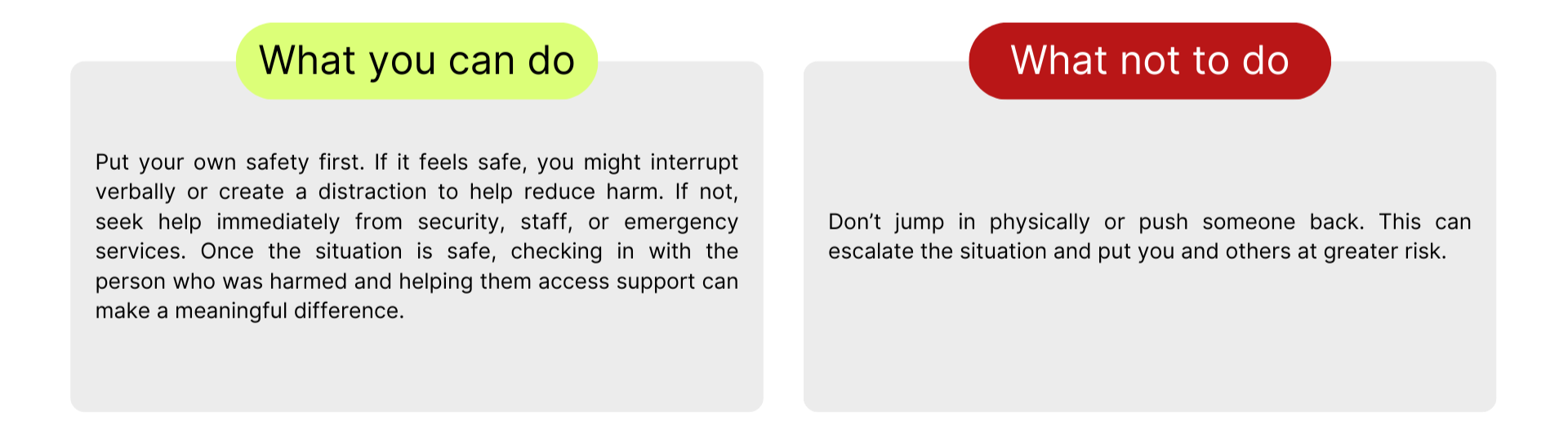
Physical aggression is serious, and safety must always come first.
Does bystander intervention actually work?
Yes. There is strong evidence that bystander intervention can reduce harm and prevent violence.
A multi-year US study examining campuses that implemented bystander education found lower rates of interpersonal violence compared to campuses without these programs. This included reductions in sexual harassment, unwanted sexual contact, stalking, and psychological dating violence. Importantly, the study also found lower rates of people engaging in harmful behaviour, not just experiencing it.
This research shows that when people are given practical tools and support to respond safely, bystander intervention can make a real difference. When individuals feel confident and equipped to act, it helps create safer environments and stronger community responses to gender-based violence.
Further resources
To learn more about being an active bystander, explore the following: