How the New NSW PDHPE Syllabus is Changing Consent Education in Schools
Why the PDHPE syllabus has changed
Across Australia, there is growing recognition that preventing gender-based and sexual violence must begin early through education. Schools are now seen as a key setting for primary prevention, with comprehensive respectful relationships and consent education at the centre of national strategies such as the National Plan to End Violence Against Women and Children 2022–2032.
This national shift has been accelerated by community advocacy, most notably the 2021 petition led by Chanel Contos that, alongside widespread media reporting, brought attention to the prevalence of sexual assault and harmful behaviours among young people. In response, Australian governments committed to mandating age-appropriate consent education in all schools from 2023. This has included significant reforms such as updated respectful relationships curricula from Kindergarten to Year 10, mandatory teacher training to better support student disclosures, and strengthened policy responses.
Research shows that when young people are taught about consent, relationships and personal rights, they are better equipped to form safe, respectful connections and less likely to experience harm (UNESCO, 2018). Building these skills throughout childhood is critical for preventing gender-based violence and promoting healthy behaviours into adulthood (Our Watch, 2021).
The updated NSW PDHPE syllabus reflects this broader shift by positioning comprehensive respectful relationships and consent education as essential for student safety, wellbeing and lifelong outcomes.
Key changes in the NSW PDHPE syllabus (2024)
The new PDHPE 7–10 syllabus, to be implemented from 2027, introduces a clearer and more comprehensive approach to teaching consent and respectful relationships through four key areas:
Consent education is embedded across all stages
Consent is no longer taught as a one-off topic. It is embedded from Kindergarten through to Year 10, using a spiral curriculum whereby learning builds in complexity and depth as children progress through their schooling years.
This includes key learning outcomes across stages:
Early years: bodily autonomy, personal boundaries, protective behaviours
Primary years: rights, respect, online safety
Secondary years: consent in relationships, communication, power and legal contexts
This ensures students develop a deep, age-appropriate understanding of consent across their schooling.
Importantly, consent education is not taught in isolation; it is integrated across topics such as identity, relationships, safety and decision-making. This requires a coordinated, whole-school approach rather than standalone lessons.
Stronger focus on respectful relationships
Respectful relationships is now a core focus area within the syllabus. Students learn to:
build and maintain safe, respectful relationships
recognise abuse, coercion and power imbalances
communicate boundaries clearly and respectfully
understand how consent supports positive relationships
Greater emphasis on online safety and real-world application
The updated syllabus reflects the realities of young people’s lives by addressing:
digital consent and image sharing
online abuse and coercion
help-seeking and protective strategies
ethical decision-making in complex situations
A strengths-based, preventative approach
The syllabus focuses on building students’ skills, confidence and agency rather than simply avoiding risk. This strengths-based approach empowers students to make informed, respectful decisions.
Challenges for schools implementing consent education
While the curriculum changes are significant, implementation can be complex. Schools must:
embed consent education across multiple year levels
deliver sensitive content in a safe, inclusive way
align teaching with wellbeing frameworks and policies
support teachers who may feel underprepared
How Learning Consent supports PDHPE implementation
Learning Consent works with schools to deliver curriculum-aligned, whole-school comprehensive respectful relationships and consent education programs that make implementation practical and effective.
Our Whole-Of-School Program is tailored to the specific context of each school. In consultation with key stakeholders within the school community, our team designs and develops all program content. We then handover the content for teaching staff at each school to deliver the program content to students, via PDHPE lessons or wellbeing lessons.
The Learning Consent team supports the program delivery with parent/carer seminars, professional development for teaching staff and whole-of-staff seminars. This Whole-of-School approach ensures the entire community is enabled to support the program, enhancing students’ learning experience.
We do this through 5 key approaches:
Curriculum-aligned and evidence-based
All programs align with the NSW PDHPE syllabus and national frameworks as well as the UNESCO International Technical Guidance on Sexuality Education, ensuring schools meet curriculum requirements while delivering high-quality, research-informed education.
Age-appropriate, staged learning
Programs reflect the developmental progression of the syllabus: from values and identity through to consent, power and online behaviour.
For example, early sessions focus on helping students identify values and challenge gender stereotypes, which are key foundations for respectful relationships.
Whole-school approach to respectful relationships
International research has shown that school-based prevention programs can reduce the likelihood of young people experiencing or perpetrating violence later in life. Studies have also found that respectful relationships education can help challenge and change the gendered attitudes and behaviours that contribute to violence (Our Watch, 2021).
Learning Consent supports schools beyond the classroom through:
student lessons across multiple year levels
staff professional learning sessions (NESA-aligned)
parent and community education sessions
wellbeing and policy consultancy
A whole-school approach ensures that schools not only teach content but also review their policies and culture to ensure that they model respectful relationships and gender equality in all aspects of the school ecosystem (Victorian Department of Education, 2024). This ensures consistency across school culture, not just curriculum delivery.
Building teacher confidence
Teachers are supported with resourced, structured and scripted lesson plans, facilitation strategies and ongoing guidance that build their knowledge, confidence and capacity to deliver sensitive and complex content. What sets Learning Consent apart is its teacher-centred model, which recognises that teachers already hold trusted relationships within their school communities and are therefore best placed to deliver meaningful, sustainable respectful relationships education. This approach is supported by research demonstrating that effective implementation of comprehensive relationships and sexuality education depends heavily on teacher confidence and comfortability, with teacher competence consistently identified as a key gap in the successful delivery of high-quality programs (Lodge, Duffy, & Feeney, 2022).
Engaging, real-world learning
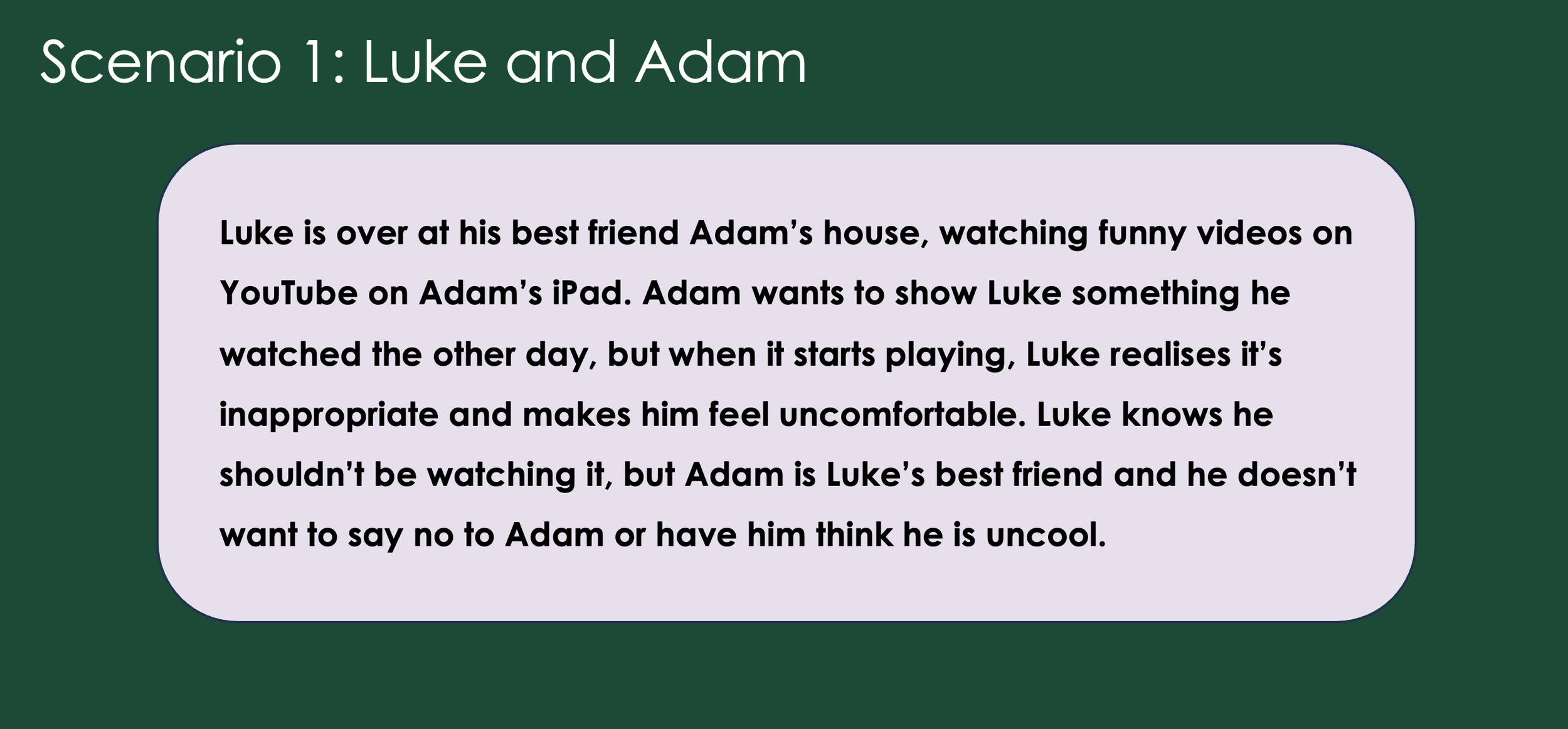
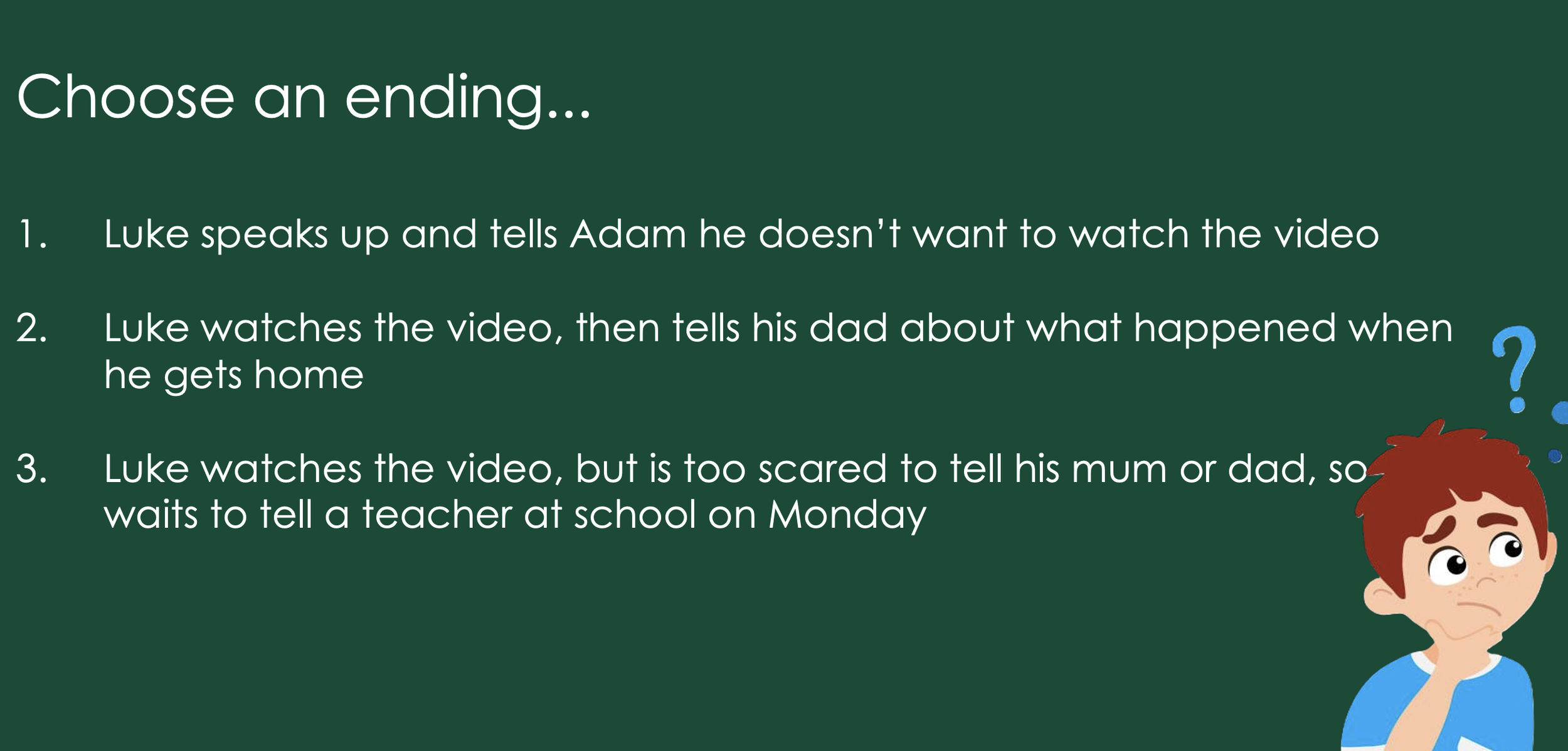
Programs use interactive, scenario-based learning to help students apply concepts such as:
consent and boundaries
bystander behaviour
communication and decision-making
At Learning Consent, we co-design scenarios with young people to ensure our programs remain relevant, engaging and reflective of the real-life situation's students are currently navigating. This approach allows our content to stay responsive to emerging social issues, online environments and the evolving challenges faced by young people today.
See some examples of these scenarios below.
Why consent education matters more than ever
Schools play a vital role in shaping young people’s attitudes, behaviours and understanding of relationships (The Australian Institute for Teaching and School Leadership, 2021). The updated PDHPE syllabus reflects a critical shift in education, recognising that teaching consent and respectful relationships is essential for student safety and wellbeing.
When implemented effectively, this education can:
reduce harmful behaviours
improve student wellbeing
build safer school communities
By partnering with schools, Learning Consent helps turn curriculum requirements into meaningful, impactful learning that supports students to develop the knowledge, skills and confidence to navigate relationships safely and respectfully.
Looking for support in implementing the new PDHPE syllabus?
At Learning Consent we provide tailored, curriculum-aligned programs for schools across Australia.